The Method
The old training, taught plainly.
An atelier is a school built around one working painter's method. This one descends from the classical tradition: Rembrandt's light, Bouguereau's drawing, and the patient order of operations that made both possible.
What the old ateliers taught, and what this one still teaches, is not a style. It is an order of operations. Everything the eye needs to build a convincing painting arrives in a sequence, and the sequence is the discipline. Skip a step and the painting tells on you within a week.
Drawing first
Nothing goes on canvas that has not been solved on paper. Proportion, gesture, and structure are drawing problems; paint only makes their errors permanent.
Value before color
A painting reads at twenty feet by its values, not its hues. The monochrome study comes first, and color is earned only after the values hold.
The limited palette
A handful of pigments, thoroughly known, beats a taboret of strangers. Mixing is taught as a discipline: warm against cool, chroma spent deliberately.
The living subject
Photographs are references, not masters. The training eye is built from life: the sitter, the cast, the mirror, the window light.
Design with the client
The atelier's commissions are composed collaboratively: studies approved before canvas, progress shown at every stage. Students learn the same honesty.
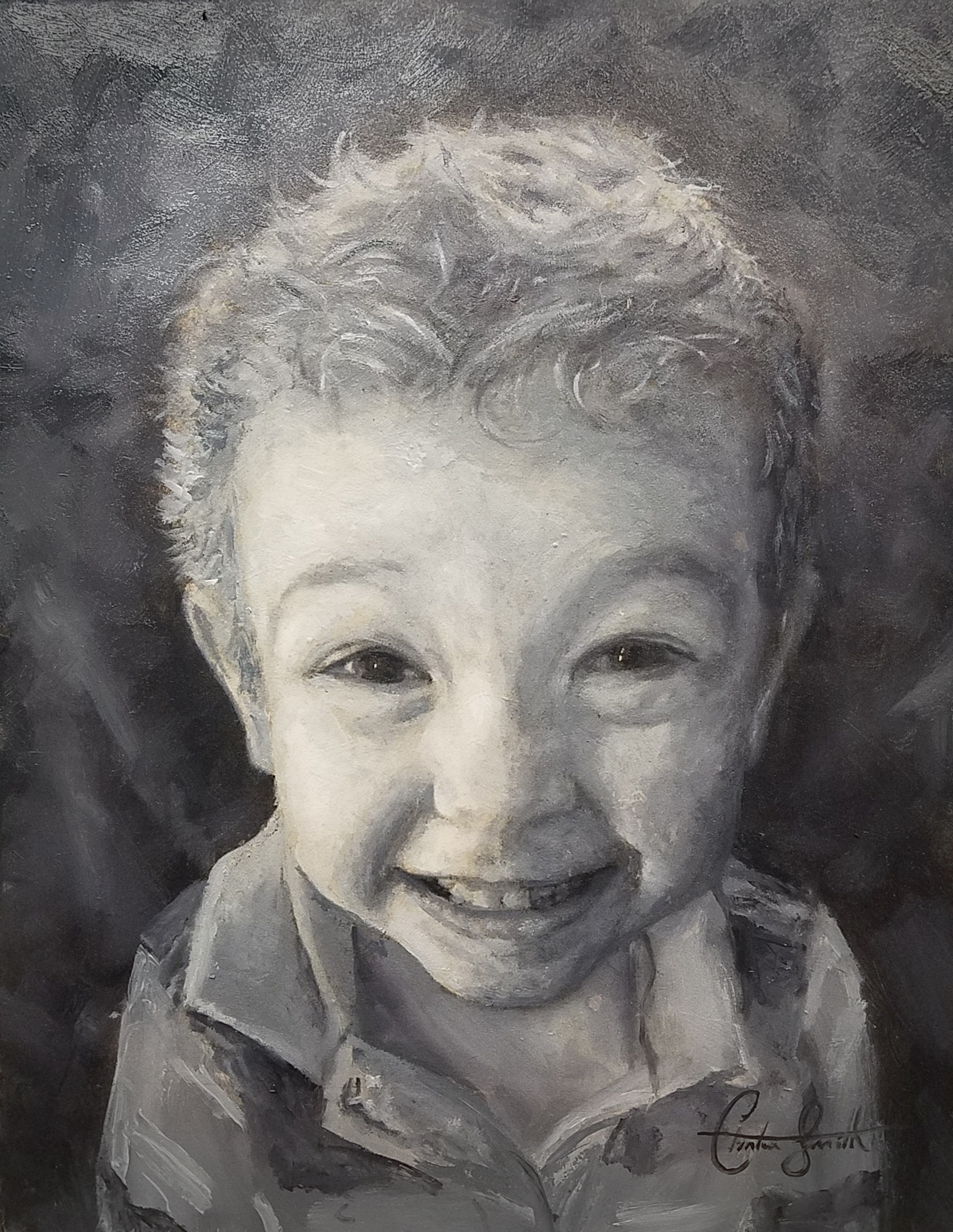
Value before color, in practice
A painting is built in gray first.
This portrait was resolved entirely in value before a single warm or cool note was allowed in. When the lights, halftones, and darks already hold the likeness, color becomes the last and easiest step. It is the discipline every student practices here first.
Materials and palette
Six tubes. Rembrandt's light.
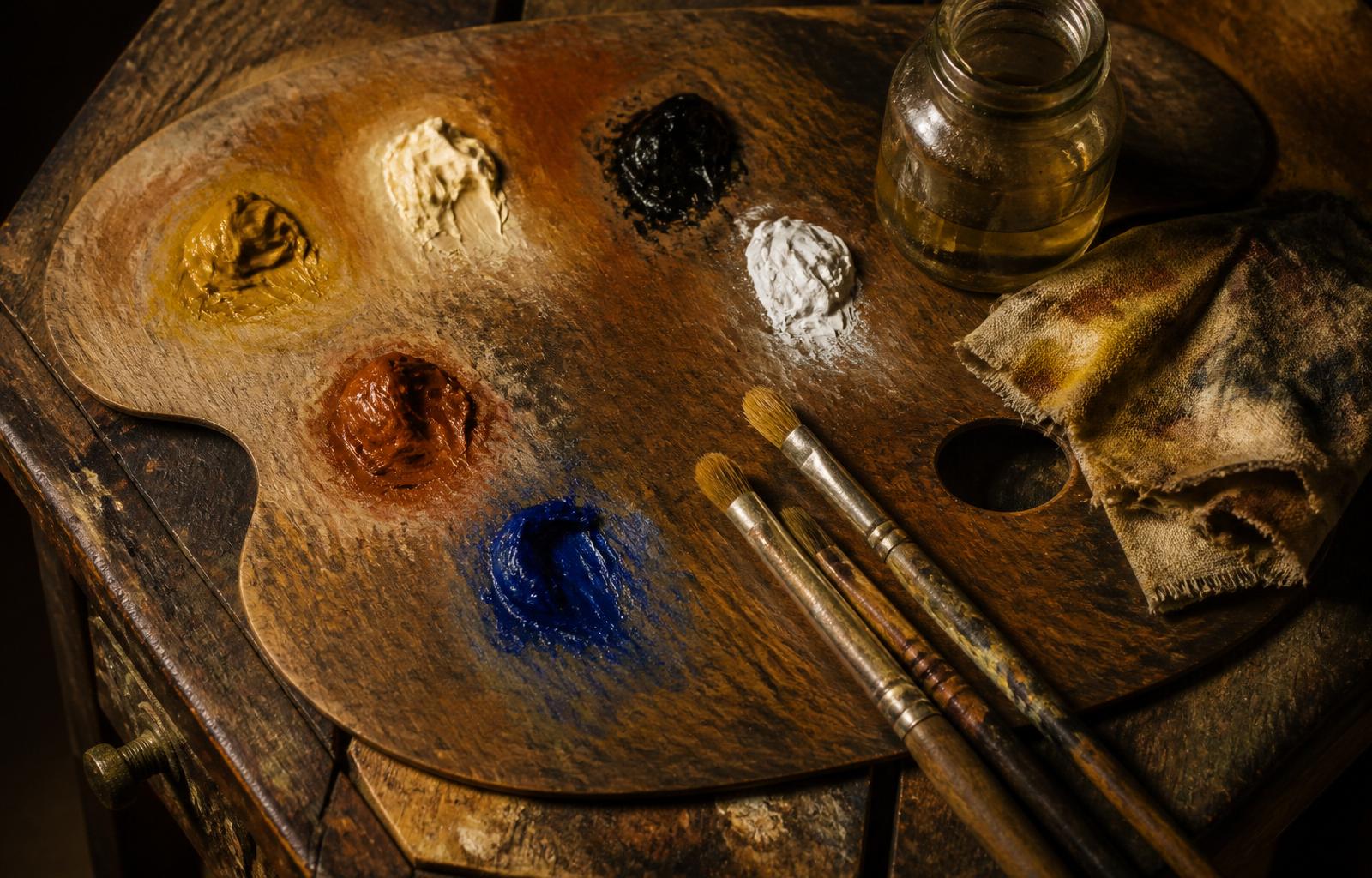
The atelier teaches on a limited earth-plus-primary palette because it forces mixing to become a subject of study. Once a painter can find any note in nature with six tubes, adding a seventh is a choice, not a crutch.
Yellow ochre
The warm ground of skin
Cadmium red light
Chroma reserved for accents
Burnt sienna
Halftone, shadow, the darks
Ultramarine blue
Cool depth and neutral mixing
Ivory black
A green in disguise
Titanium white
The last word, used sparingly
In person
The method is taught in person.
Workshops run small so the teaching happens at your easel, not from a stage.
See the workshopsQuestions
What is the atelier method?
A traditional way of training painters in order: drawing first, then value, then a limited palette of color, all studied from life under a working painter's eye.
Why learn drawing before painting?
Proportion, gesture and structure are drawing problems. Paint does not fix them; it only makes the errors harder to change.
Why value before color?
A painting reads by its lights and darks first. If the values are right, many color choices work. If they are wrong, no color saves the picture.
What palette does Clint Atelier teach?
Yellow ochre, cadmium red light, burnt sienna, ultramarine blue, ivory black and titanium white: a small palette known thoroughly.
Is painting from photographs allowed?
Photographs are used as references, but the eye is trained from life: the sitter, the cast, the mirror and window light.
How is this different from an online course?
The teacher sees your actual canvas in the room and corrects the one thing that matters next, which video lessons cannot do.